
The Winter Solstice (Yule)
Welcoming seasonal transitions and return of the light.
There’s something quiet… special… spiritual… about the longest night of the year. Yule, or the Winter Solstice, is one of the most popular seasonal shifts of the year, beloved and celebrated by many, and for good reason. It’s the one that invites us to pause, breathe, and notice the changes that are happening in the world around us… mainly the slow, steady return of the Sun. It’s a time to honor darkness, yes, but also to welcome the first flickers of light that will grow stronger in the months ahead.
For me, the Winter Solstice has always been about noticing… and feeling… the small signs of life and magic in the world. A string of lights glowing through a frosted window, the scent of pine from a garland, the way candlelight softens the edges of a quiet evening. These little moments are a reminder that even in the deepest dark, light… magic… is never gone.
What Is Yule?
Yule is one of the oldest seasonal celebrations, rooted in Northern European traditions (originally Norse and Germanic paganism to be specific). Long before calendars and clocks, people marked the changing seasons with rituals that honored the Sun’s return, the endurance of life through winter, and the deep rhythm of the Earth. They were primarily agricultural communities that planned and lived their lives by the seasons, and this darkest day would have been a challenging and uncertain time in many ways.
Community was at the root of it all, because coming together meant a better opportunity for survival. They would light fires, decorate with evergreens, and gather together to share warmth, food, and stories. These practices reflected a fundamental truth that community matters, life continues (even in winter), and our connection to nature’s cycles is a source of comfort and guidance… and one that we must maintain a relationship with.
Yule or the Winter Solstice?
You’ll often hear this time of year called by two names: the Winter Solstice and Yule. Both honor the same moment - the turning point when the Sun reaches its lowest arc in the sky and begins its slow return toward longer days. But the words come from different roots, each carrying its own flavor and story.
The Winter Solstice is the astronomical term - the literal event that occurs when the Northern Hemisphere tilts farthest from the Sun. It’s universal, measurable, and celebrated in many cultures around the world. Ancient peoples everywhere marked this turning point with festivals and fires, feasts and offerings.
Yule, on the other hand, comes from the Old Norse word Jól (pronounced “yule”) and the Old English Gēol, referring to midwinter celebrations held in Northern Europe long before the Christian era. These were deeply seasonal, rooted in the land and the cycles of life and light.
Over time, as Christianity spread through Europe, many Yule traditions were woven into Christmas celebrations - evergreens, candles, feasting, gift-giving, and the emphasis on light returning. So, while the word “Yule” still carries a Pagan and nature-based resonance today, much of its spirit quietly lives on in the wider winter holidays as well.
You might hear people who follow or honor nature-based paths - Pagan, Wiccan, Druidic, or those simply attuned to the Earth’s cycles - use the word Yule as part of the Wheel of the Year, the eight seasonal festivals marking the Sun’s journey through the seasons. Others might prefer Winter Solstice for its simple, universal connection to astronomy and seasonal rhythm.
There’s no right or wrong name to use. Whether you call it Yule or the Winter Solstice (personally, I call it both), it’s the same moment - a shared pause in time when the Earth begins her slow turn back toward the light.
Yule and the Sky
Astrologically, the Winter Solstice occurs as the Sun moves into Capricorn, a sign that encourages reflection, patience, and grounded planning. The solstice reminds us to pause, take stock of the year behind us, and consider the foundations we want to lay for the year ahead. It also brings to light (no pun intended) the reality of facing cold, challenging days ahead so as to prepare in the ways we can. It’s about the long haul. The symbol of Capricorn is that of a Sea Goat - one that can traverse ocean and rock - who climbs slowly, methodically on the steepest of mountain slopes to get to the peak.
From an astronomical perspective, this is the day with the least sunlight in the Northern Hemisphere. This point is when the sun meets the Tropic of Capricorn (a connection to the sun entering the sign of Capricorn as I mentioned above) at approximately 23.4° south of the equator. Yet even as the Sun dips to its lowest point, we know it will begin its slow climb again within a few days time. The solstice is a living symbol of balance: endings that make way for beginnings, darkness that gives birth to light.
Yule in Story and Symbol
The solstice has always been told through stories - myths that hold meaning not only for the turning of the Earth but also for the inner landscapes we move through.
The Holly King and the Oak King
In old Celtic lore, the Holly King rules over the waning half of the year - from the midsummer to Yule - while the Oak King reigns over the waxing half, from Yule to midsummer. On the solstice, they meet in a symbolic exchange: the Oak King, symbol of the newborn Sun, begins to rise in strength as the Holly King, spirit of the dark season, fades into rest.
Their “battle” is a story of rhythm, not rivalry, and a reminder that endings and beginnings are intertwined.
The Cailleach and Brigid: The Winter and the Dawn
In Celtic tradition, the turning of the seasons is also held in the hands of two goddesses: the Cailleach and Brigid.
The Cailleach - the ancient winter hag (heavy crone energy) - is the great shaper of the land. She brings the storms, tends to the mountains, and governs the dark half of the year. Fierce and wise, she teaches endurance and the power of rest. She reminds us that decay and stillness are not the end, but a necessary part of life’s renewal.
As the wheel turns toward Yule and the light begins to return, Brigid’s presence stirs beneath the frozen earth. Goddess of the hearth, poetry, and inspiration, she represents the first stirrings of warmth and the quiet promise of spring. By Imbolc (the next seasonal celebration in the Wheel of the Year), she fully awakens, carrying the flame of creativity and new life that will grow through the light half of the year.
Together, the Cailleach and Brigid mirror the Earth’s natural rhythm: one embodying stillness, the other renewal. They remind us that rest and rebirth are not opposites, but partners in the great cycle of becoming.
Norse Threads
In the Norse world, Yule was a time of deep reverence and mystery. Odin, leading the Wild Hunt across the winter skies, symbolized the movement between worlds and the thinning veil between the living and the unseen. His presence carried both awe and reflection, guiding souls through the darkness toward transformation and renewal.
No matter the culture, across these stories runs a single truth: Yule marks the threshold. The old giving way to the new, darkness yielding to light, the Earth’s deep breath before the next awakening.
Symbols and Seasonal Traditions
The Winter Solstice is rich with imagery and symbols drawn from the natural world. You can use these as inspiration to decorate, create an altar, or simply bring a sense of the season into your day. You’ll notice many of these are the same as what are included in modern day Christmas decorations. That’s because many of the traditions and symbols were carried over from ancient practices (like that of Pagans) once Christianity swept through Europe.
Colors: Deep greens, rich reds, golds, and whites reflect life, warmth, and the returning light.
Plants and Foliage: Evergreens, holly, ivy, mistletoe, and pinecones symbolize resilience and continuity through the winter.
Berries and Fruits: Red berries, pomegranates, and dried fruits bring vibrancy and a sense of abundance.
Candles and Light: Represent hope, the Sun’s return, and the inner light we carry with us.
Natural Textures: Wood, bark, and stones connect us to the Earth and the season’s quiet grounding energy.
Arranging these in your home, on a table, in crafts, or in a small seasonal altar can help you notice and honor the natural rhythms at this time of year. Even a single sprig of pine or a flickering candle can carry the essence of Yule into your day. I highly encourage a family forage to find some of these (assuming you’re doing so on land where it’s allowed).
Simple Ways to Celebrate
Honoring the solstice doesn’t require elaborate rituals or numerous hours. Of course, if you have the time that’s wonderful, but small, mindful practices can be meaningul and magical on their own. As with anything, it’s simply about paying attention and being intentional.
Light a Candle or String of Lights: Let the glow remind you of hope, resilience, and the light that returns every year.
Create a Seasonal Altar: Use plants, berries, or seasonal objects to create a focal point for reflection.
Reflect and Set Intentions: Write down what you want to release (the darkness) and what you hope to cultivate in the coming months (the light).
Share a Simple Meal: Invite friends or family over to share seasonal foods and warm drinks to celebrate community and connection.
Step Outside: Notice the stillness of the season, the quality of light, and the rhythms of nature.
Embracing the Season
The Winter Solstice is a gentle invitation to connect with the world around us, with the cycles of the year, and with ourselves. It reminds us that even in the darkest night, life continues, and light is always returning.
This season, let yourself be guided by the quiet magic of winter: the flicker of a candle, the scent of evergreens, the comfort of connection. These small gestures carry the heart of the season and help us step into the coming year with grounded intention, warmth, and presence.
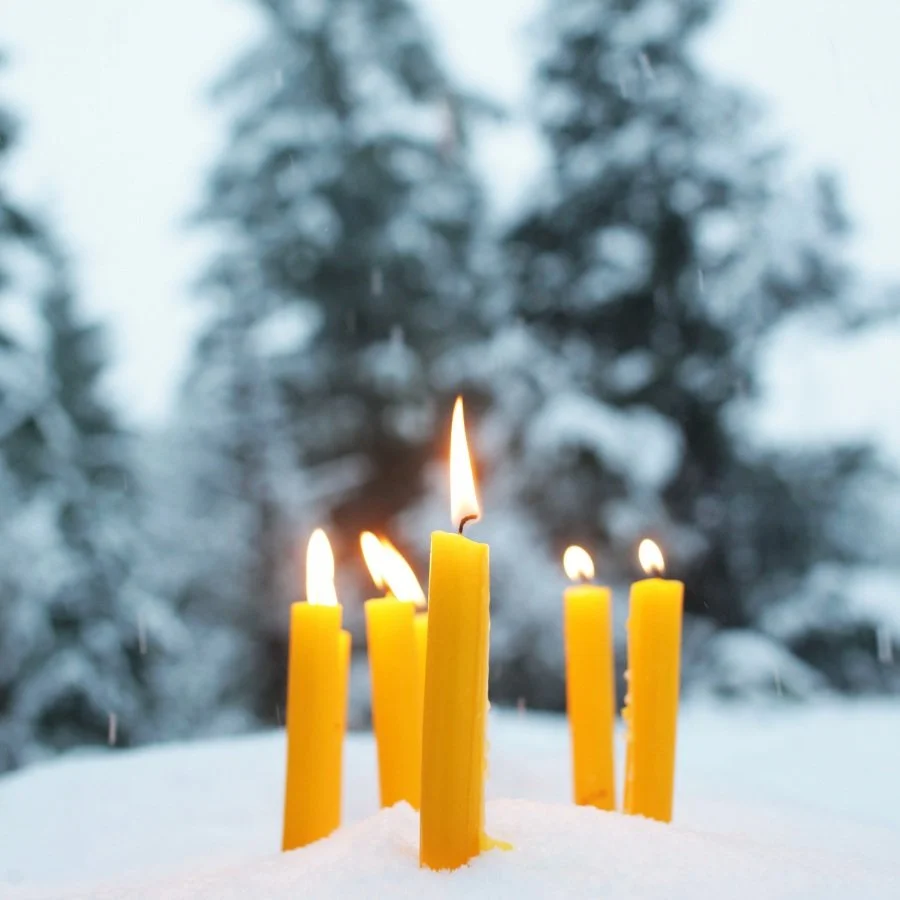
photo credit: Snowflock via Getty Images